Machinery Relocation Planned Around Load Dynamics
Heavy Equipment Moving in Anoka County for industrial facilities managing oversized machinery relocation
AW mobile service handles heavy equipment moving in Anoka County for machinery that exceeds standard transport dimensions and weight ratings. Industrial facilities face specific challenges when relocating fabrication equipment, construction machinery, or manufacturing tools that require load distribution planning before movement begins. The logistics start before loading, with site access evaluation and anchor point identification that determine how weight transfers during lift operations.
Heavy equipment moving involves calculating center-of-gravity positions, selecting rigging configurations that prevent tipping during transitions, and coordinating ground support that can bear concentrated loads without surface failure. Industrial machinery often includes hydraulic components, alignment-sensitive assemblies, and exposed drive systems that dictate how straps are positioned and what protection barriers prevent contact damage during securing operations.
Request a heavy equipment moving quote to review your machinery specifications and site access conditions.
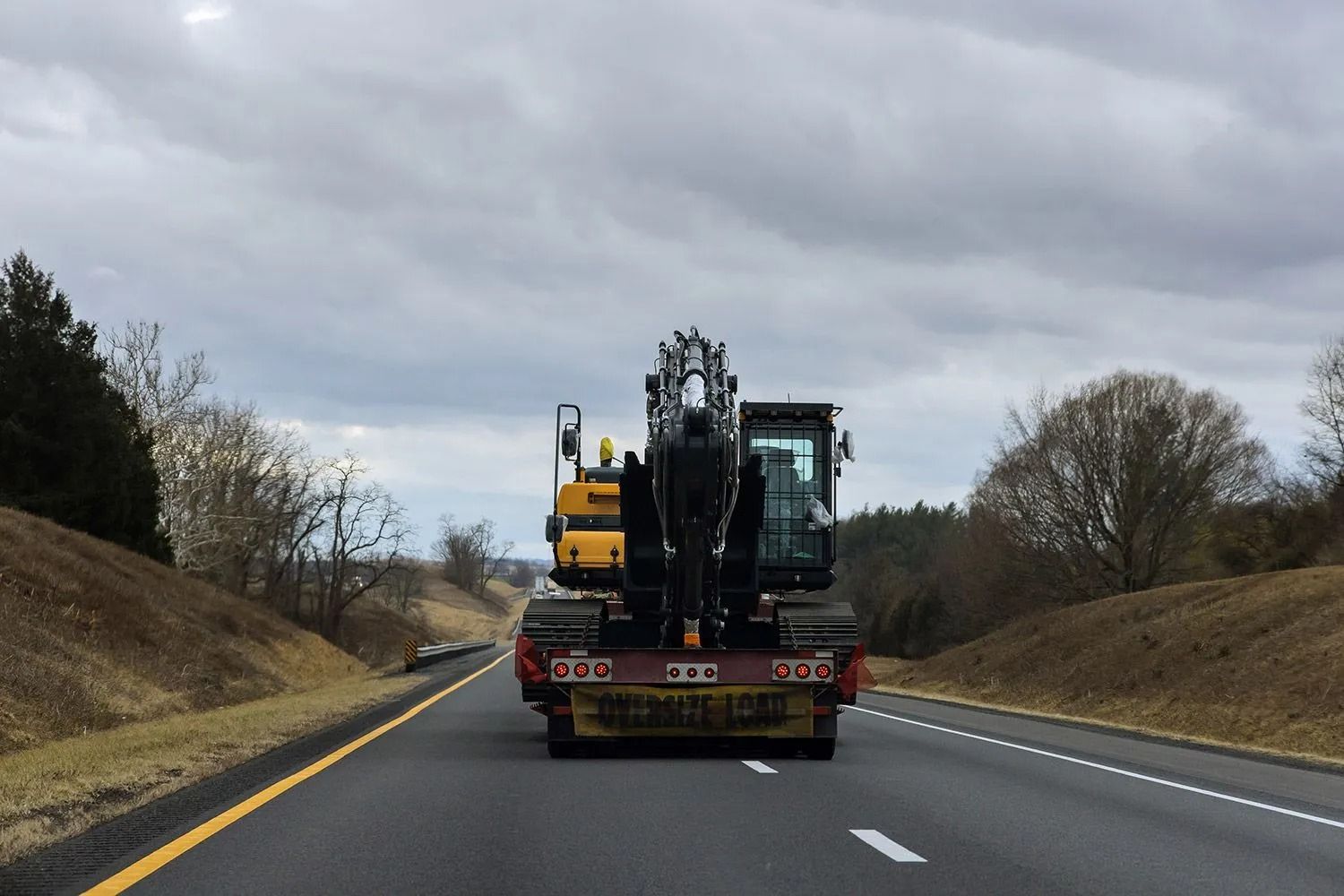
What Happens During Machinery Load Planning
The process begins with dimensional measurement and weight confirmation, since manufacturer specifications don't always account for retrofitted components or fluid-filled systems that change mass distribution. Your equipment receives a customized loading plan that identifies pivot points, determines whether disassembly reduces transport risk, and maps the path from current position to transport bed, accounting for door widths, floor load limits, and overhead clearance that affect movement sequence.
Once relocated, your machinery sits exactly where operational requirements dictate, with mounting points undamaged and sensitive assemblies maintaining their factory alignment. You'll notice that hydraulic lines remain intact, electrical housings show no impact marks, and painted surfaces lack the scraping that occurs when equipment contacts straps positioned without load geometry knowledge. AW mobile service coordinates each phase so industrial operations resume without recalibration delays caused by rough handling.
Commercial equipment relocation differs from standard hauling in the pre-move documentation required for insurance validation and the post-move positioning accuracy that prevents rework. Some machinery includes leveling requirements measured in thousandths of an inch, while other equipment simply needs stable placement on reinforced flooring that distributes static weight without settling over time.
Questions About Relocating Industrial Equipment
Industrial clients typically ask about load planning and what preparation steps reduce relocation time, especially when machinery downtime affects production schedules.
What determines whether equipment requires disassembly before moving?
Equipment geometry relative to exit pathways determines disassembly needs—machines taller than door headers or wider than hallway clearances require partial breakdown, while others move intact if floor load ratings support concentrated weight during pivoting. The decision depends on whether disassembly time plus reassembly costs less than the alternative access modifications.
How does rigging configuration change for machinery with irregular weight distribution?
Asymmetric machinery requires sling positioning that accounts for offset center-of-gravity locations, often using multi-point rigging where each attachment bears calculated load percentages rather than equal weight distribution. The configuration prevents tipping during lift-off and keeps equipment level throughout transit phases.
Why do some facilities require floor protection during heavy equipment movement?
Concentrated loads from lift equipment or machinery contact points exceed standard floor PSI ratings, causing surface cracking or subfloor compression that worsens over time. Steel plates or load-spreading mats distribute weight across larger surface areas, keeping pressure within structural tolerance limits.
What local factors in Anoka County affect heavy equipment moving logistics?
Winter ground conditions limit outdoor staging areas when soil bearing capacity drops due to freeze-thaw cycling, while older industrial buildings in the area often have floor systems designed for lower load ratings than modern equipment generates. Route planning accounts for seasonal access limitations and building-specific structural constraints.
How is transport secured differently for machinery with exposed moving parts?
Exposed drive systems, hydraulic cylinders, and precision rails receive individual protection barriers before straps are applied, since direct strap contact bends delicate components or introduces contamination into bearing surfaces. Each vulnerable element gets isolated from load-securing hardware through padding positioned based on machinery drawings.
AW mobile service develops relocation plans specific to your equipment dimensions and facility constraints. Schedule a consultation to review your machinery specifications and discuss the loading approach that minimizes downtime in Anoka County industrial operations.